
Myofascial Release
- posted: Oct. 01, 2025
🩺 Graston Therapy: A Modern Approach to Treating Chronic and Stubborn Pain
Understanding Soft Tissue Dysfunction
Soft tissue injuries often go beyond simple muscle soreness. When the body experiences trauma — such as a sprain, strain, or repetitive overuse — it forms scar tissue during healing. Over time, this scar tissue can cause tightness, nerve entrapment, restricted motion, and chronic pain.
Traditional treatments may reduce inflammation temporarily but often fail to address the root cause — the dysfunctional soft tissue itself.
This is where Graston Therapy comes in.
What Is Graston Therapy?
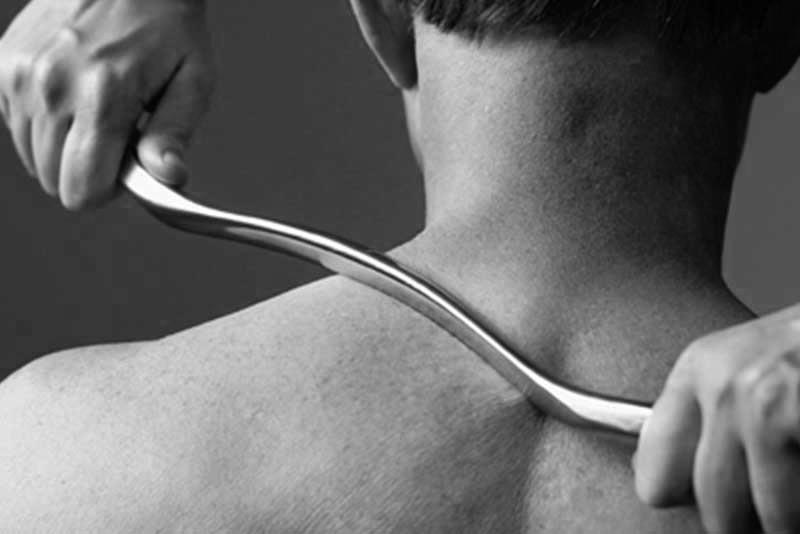
Graston Therapy is an advanced form of Instrument-Assisted Soft Tissue Mobilization (IASTM) that uses specially designed stainless-steel instruments to detect and treat areas of soft tissue restriction.
The practitioner gently glides these tools over the skin to locate scar tissue, adhesions, and fascial restrictions. Once identified, targeted pressure helps break down the adhesions, stimulate blood flow, and initiate the body’s natural healing response.
The Goals of Graston Therapy
Break Down Scar Tissue and Fascia Adhesions
When soft tissues such as muscles, tendons, or ligaments are injured, collagen fibers can heal irregularly, forming knots or “sticky” areas. Graston therapy helps release these restrictions, restoring elasticity and proper movement.Improve Mobility and Flexibility
Chronic tightness limits range of motion and alters biomechanics. By stretching and remodeling the connective tissue, this therapy helps restore normal function, making it easier to move without pain.Enhance Circulation and Healing
The controlled microtrauma caused by Graston instruments increases local blood flow, bringing nutrients and oxygen to the injured area. This accelerates tissue repair and helps the body replace old, damaged fibers with healthy collagen.Neurological Re-education
Graston Therapy stimulates mechanoreceptors and proprioceptors, which are responsible for sensing pressure, movement, and position. Activating these receptors helps reset pain signals and improves muscle coordination and balance — a key step in lasting recovery.
Why It Helps Chronic and Nagging Conditions
Many patients live with persistent pain for months or even years because scar tissue and fascia restrictions continue to impair normal movement.
Graston Therapy is especially effective for conditions that have not improved with rest, stretching, or standard chiropractic care, such as:
Tendonitis and tendinopathy (elbow, shoulder, Achilles)
Chronic neck or lower back pain
Plantar fasciitis and heel spurs
Frozen shoulder and rotator cuff tightness
Post-surgical or post-injury scar tissue
Carpal tunnel or repetitive strain injuries
Shin splints and IT band syndrome
By treating the soft tissue restrictions at their source, Graston Therapy restores movement, relieves pain, and improves long-term function — even when other treatments have plateaued.
(Insert image: practitioner working on a patient’s calf with Graston tool, illustrating improved flexibility)
The Science Behind the Technique
Research on IASTM supports its effectiveness in:
Increasing collagen synthesis (stimulating the body’s healing process)
Decreasing pain sensitivity through neural feedback
Improving range of motion and functional outcomes
Reducing inflammation and promoting vascularization
A 2017 study in the Journal of Physical Therapy Science found that Graston Therapy significantly improved soft tissue extensibility and joint motion compared to standard stretching alone.
This combination of mechanical and neurological benefits makes it one of the most effective non-invasive methods for chronic pain management.
Our Integrated Approach at Uptown Wellness Center – Whittier
At Uptown Wellness Center, we don’t just treat symptoms — we focus on the root cause of your pain.
Our providers combine Graston Therapy, chiropractic adjustments, and targeted rehabilitative exercises to enhance alignment, restore mobility, and strengthen supporting structures.
This integrated approach ensures long-lasting results and helps prevent future injury recurrence.
Who Can Benefit
Graston Therapy is suitable for:
Athletes recovering from overuse injuries
Office workers with repetitive motion strain
Post-surgical patients with limited mobility
Individuals with chronic tightness, stiffness, or restricted movement
Each treatment plan is customized to the patient’s condition and comfort level, ensuring effective and safe results.
Experience Relief at Uptown Wellness Center – Whittier
If you’ve been struggling with persistent pain or stiffness that hasn’t improved with other treatments, Graston Therapy could be the missing link in your recovery.
- posted: Oct. 01, 2025
🩺 Graston Therapy: A Modern Approach to Treating Chronic and Stubborn Pain
Understanding Soft Tissue Dysfunction
Soft tissue injuries often go beyond simple muscle soreness. When the body experiences trauma — such as a sprain, strain, or repetitive overuse — it forms scar tissue during healing. Over time, this scar tissue can cause tightness, nerve entrapment, restricted motion, and chronic pain.
Traditional treatments may reduce inflammation temporarily but often fail to address the root cause — the dysfunctional soft tissue itself.
This is where Graston Therapy comes in.
What Is Graston Therapy?
Graston Therapy is an advanced form of Instrument-Assisted Soft Tissue Mobilization (IASTM) that uses specially designed stainless-steel instruments to detect and treat areas of soft tissue restriction.
The practitioner gently glides these tools over the skin to locate scar tissue, adhesions, and fascial restrictions. Once identified, targeted pressure helps break down the adhesions, stimulate blood flow, and initiate the body’s natural healing response.
The Goals of Graston Therapy
Break Down Scar Tissue and Fascia Adhesions
When soft tissues such as muscles, tendons, or ligaments are injured, collagen fibers can heal irregularly, forming knots or “sticky” areas. Graston therapy helps release these restrictions, restoring elasticity and proper movement.Improve Mobility and Flexibility
Chronic tightness limits range of motion and alters biomechanics. By stretching and remodeling the connective tissue, this therapy helps restore normal function, making it easier to move without pain.Enhance Circulation and Healing
The controlled microtrauma caused by Graston instruments increases local blood flow, bringing nutrients and oxygen to the injured area. This accelerates tissue repair and helps the body replace old, damaged fibers with healthy collagen.Neurological Re-education
Graston Therapy stimulates mechanoreceptors and proprioceptors, which are responsible for sensing pressure, movement, and position. Activating these receptors helps reset pain signals and improves muscle coordination and balance — a key step in lasting recovery.
Why It Helps Chronic and Nagging Conditions
Many patients live with persistent pain for months or even years because scar tissue and fascia restrictions continue to impair normal movement.
Graston Therapy is especially effective for conditions that have not improved with rest, stretching, or standard chiropractic care, such as:
Tendonitis and tendinopathy (elbow, shoulder, Achilles)
Chronic neck or lower back pain
Plantar fasciitis and heel spurs
Frozen shoulder and rotator cuff tightness
Post-surgical or post-injury scar tissue
Carpal tunnel or repetitive strain injuries
Shin splints and IT band syndrome
By treating the soft tissue restrictions at their source, Graston Therapy restores movement, relieves pain, and improves long-term function — even when other treatments have plateaued.
(Insert image: practitioner working on a patient’s calf with Graston tool, illustrating improved flexibility)
The Science Behind the Technique
Research on IASTM supports its effectiveness in:
Increasing collagen synthesis (stimulating the body’s healing process)
Decreasing pain sensitivity through neural feedback
Improving range of motion and functional outcomes
Reducing inflammation and promoting vascularization
A 2017 study in the Journal of Physical Therapy Science found that Graston Therapy significantly improved soft tissue extensibility and joint motion compared to standard stretching alone.
This combination of mechanical and neurological benefits makes it one of the most effective non-invasive methods for chronic pain management.
Our Integrated Approach at Uptown Wellness Center – Whittier
At Uptown Wellness Center, we don’t just treat symptoms — we focus on the root cause of your pain.
Our providers combine Graston Therapy, chiropractic adjustments, and targeted rehabilitative exercises to enhance alignment, restore mobility, and strengthen supporting structures.
This integrated approach ensures long-lasting results and helps prevent future injury recurrence.
Who Can Benefit
Graston Therapy is suitable for:
Athletes recovering from overuse injuries
Office workers with repetitive motion strain
Post-surgical patients with limited mobility
Individuals with chronic tightness, stiffness, or restricted movement
Each treatment plan is customized to the patient’s condition and comfort level, ensuring effective and safe results.
Experience Relief at Uptown Wellness Center – Whittier
If you’ve been struggling with persistent pain or stiffness that hasn’t improved with other treatments, Graston Therapy could be the missing link in your recovery.
Uptown Wellness Center
15141 Whittier Blvd. Ste. 210,
Whittier, CA 90603